

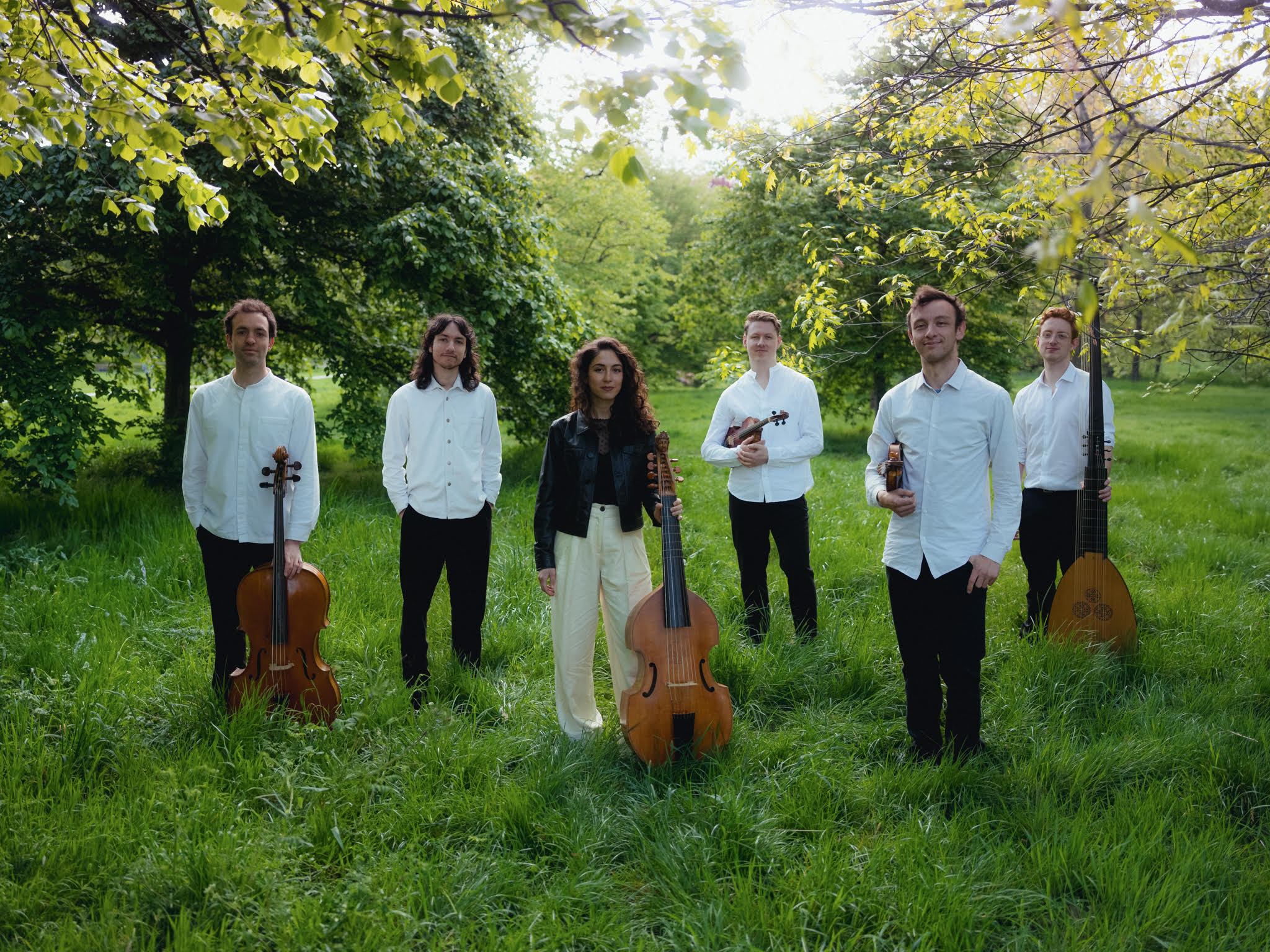
The award-winning vibrant, period instrument group present Heroines of the Seicento
Bellot Ensemble is a vibrant period instrument group celebrated for energetic performances and a distinctive approach to seventeenth century repertoire. Rooted in historical performance practice, the ensemble blends detailed research with spontaneity, particularly through written divisions and the expressive interpretation of early texts. Their work often brings together instrumental and vocal forces, with regular collaborations involving consorts, choirs, and opera companies.
From October 2025, the group began a two year term as the New Generation Baroque Ensemble, a prestigious development scheme led by BBC Radio 3, the Royal College of Music, and the National Centre for Early Music. Bellot Ensemble has also been selected for the Britten Pears Young Artist Programme 2025 to 2026, taking part in the Chamber Music Residency at Snape Maltings supported by the Keith Coventry Bursary.
Recent and forthcoming highlights include performances at the Oxford Festival of the Arts, new appearances through the NGBE scheme, and a residency in 2026 with Les Arts Florissants’ Odyssée programme.
Programme
Francesca Caccini (1587-after 1641)
La liberazione di Ruggiero dall’isola d’Alcina (1625)
- Sinfonia (before the Prologo)
- Scena II: “Non so qual sia maggiore”
3. Isabella Leonarda (1620-1704)
Sonate a 1, 2, 3 e 4 istromenti (1693) – Sonata decima
4. Antonia Bembo (c. 1640-c. 1720)
Produzioni armoniche (manuscript, c. 1695-1700) – “Habbi pietà di me”
5. Maurizio Cazzati (1616-1678)
Trattenimenti per camera (1660) – “Ballo delle Ombre”
6. Barbara Strozzi (1619-1677)
Cantate, ariette e duetti (1651) – “Amor dormiglione”
7. Biagio Marini (1594-1663)
Sonate, symphonie, canzoni, passe’mezzi, baletti, corenti, gagliarde e retornelli (1629) – Sonata terza variata per il Violino
8. Isabella Leonarda (1620-1704)
Mottetti a una, due, tre e quattro voci (1677) – “Nive puer”
9. Barbara Strozzi (1619-1677)
Arie (1664) – “Che si può fare”
Interval
10. Francesca Caccini (1587-after 1641)
La liberazione di Ruggiero dall’isola d’Alcina (1625), Scena I – Sinfonia
11. Barbara Strozzi (1619-1677)
Cantate, ariette e duetti (1651) – “L’amante consolato”
12. Isabella Leonarda (1620-1704)
Sonate a 1, 2, 3 e 4 istromenti (1693) – Sonata terza
13. Francesca Campana (c. 1610-1665)
Arie a una, due e tre voci (1629) – “È già rotto lo strale”
14. Andrea Falconieri (c. 1585-1656)
Il primo libro di canzone, sinfonie, fantasie, capricci, brandi, correnti, gagliarde, alemane, volte (1650) – “La suave melodia”
15. Lucia Quinciani (fl. 1611)
Marc’Antonio Negri, Affetti amorosi, libro secondo (1611) – “Udite lagrimosi spirti d’Averno”
16. Giovanni Girolamo Kapsberger (c. 1580-1651)
Libro quarto d’intavolatura di chitarone (1640) – Canario
17. Barbara Strozzi (1619-1677)
Diporti di Euterpe, overo cantate e ariette a voce sola (1659) – “Mi fa rider”
18. Giuseppino del Biado (d. 1616), attributed
Codice Barbera (manuscript, early 17th century) – “Fuggi, fuggi, fuggi da questo cielo” (later known as “La Mantovana”)
19. Biagio Marini (1594-1663)
Per ogni sorte d’istromento musicale, diversi generi di sonate, da chiesa e da camera (1655) – Sonata sopra ‘Fuggi dolente core’ à 3
20. Antonia Bembo (c. 1640-c. 1720)
Produzioni armoniche (manuscript, c. 1695-1700) – “In amor ci vuol ardir”
21. Barbara Strozzi (1619-1677)
Cantate, ariette e duetti (1651) – “L’Eraclito amoroso”
Performers
Mariana Rodrigues – Soprano
Edmund Taylor – Violin
Maxim Del Mar – Violin
Jacob Garside – Violoncello
Daniel Murphy – Theorbo
Matthew Brown – Harpsichord
